

Why Your Retaining Wall Is Failing (And How to Fix It Before It’s Too Late)

[Top of Page]
A retaining wall is much more than a decorative feature or a simple boundary marker. When properly designed and installed, it serves as a critical engineering structure designed to hold back tons of earth, manage water runoff, and protect your property from erosion and structural damage. However, when these walls begin to lean, crack, or bulge, they transition from an asset to a significant liability.
At H&H Concrete and Construction, we have been the premier concrete contractor serving our community since 2001. With over two decades of experience, we have seen firsthand the devastating effects of wall failure. Whether it is a small residential garden wall or a massive commercial tiered system, the principles of physics remain the same. Understanding why these structures fail is the first step in protecting your investment and ensuring the safety of your landscape.
The Invisible Enemy: Poor Drainage and Hydrostatic Pressure
If you ask any experienced professional what the number one cause of retaining wall failure is, the answer is almost always the same: water. While soil itself is heavy, saturated soil is a different beast entirely. Research indicates that when soil becomes fully saturated, it can weigh up to 50% more than dry soil. This massive increase in weight exerts what engineers call "hydrostatic pressure" against the back of the wall.
Most failing walls lack the necessary systems to channel this water away. Without proper drainage, rainwater pools behind the wall, creating a literal "mud soup" that pushes against the concrete with thousands of pounds of force.
The Warning Signs of Drainage Issues
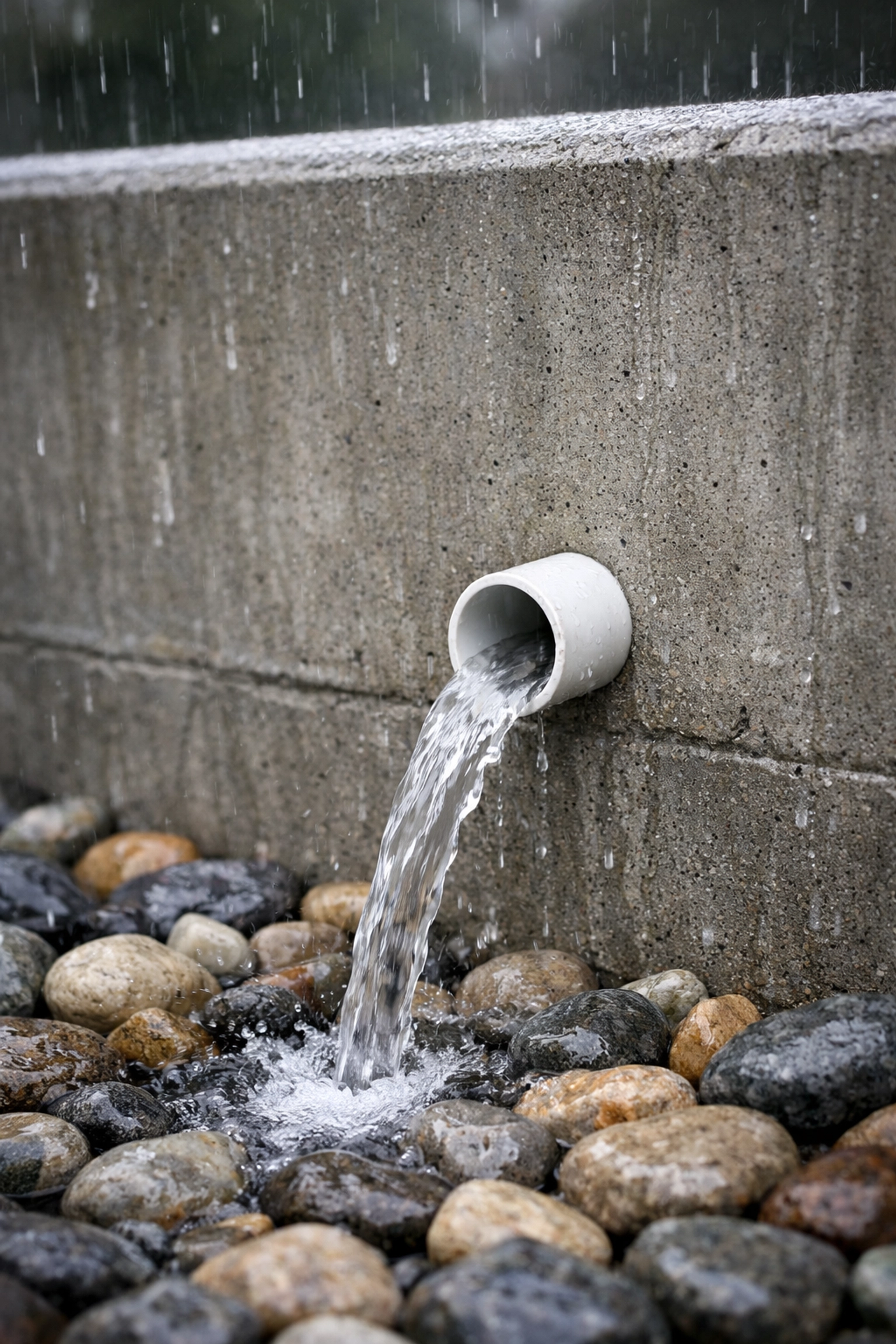
Weep Hole Clogs: If your wall has weep holes but they are bone dry during a rainstorm, the water is likely trapped behind the structure.
Efflorescence: White, powdery residue on the face of the concrete indicates that water is seeping through the material, carrying minerals with it.
Soggy Ground: If the area at the base of your wall is perpetually muddy, the water has nowhere to go.
To prevent this, we utilize state-of-the-art drainage solutions, including gravel backfill, perforated pipes (French drains), and high-quality filter fabric to ensure water flows away from the structure, maintaining its integrity for years to come.
Inadequate Footings and Foundation Failures
Every great structure begins with a solid foundation. In the world of Retaining Walls, the footing is the most crucial component. If the foundation is too shallow, set on uncompacted soil, or built above the frost line, the wall is doomed from the start.
In our region, the freeze-thaw cycle is a major factor. When the ground freezes, it expands. If the footing of your retaining wall is not deep enough, this "frost heave" can lift the entire structure, causing it to tilt and crack. Furthermore, many DIY projects or cut-rate contractors fail to properly compact the base material. Over time, the weight of the wall causes it to settle unevenly, leading to structural instability.
As a dedicated concrete contractor, H&H Concrete and Construction ensures that every project starts with a meticulously prepared base. We use specialized equipment to achieve the highest level of soil compaction and ensure that our footings are designed to meet or exceed local building codes. Our commitment to durable solutions means we never take shortcuts on the parts of the wall you can’t see.
Lack of Structural Reinforcement
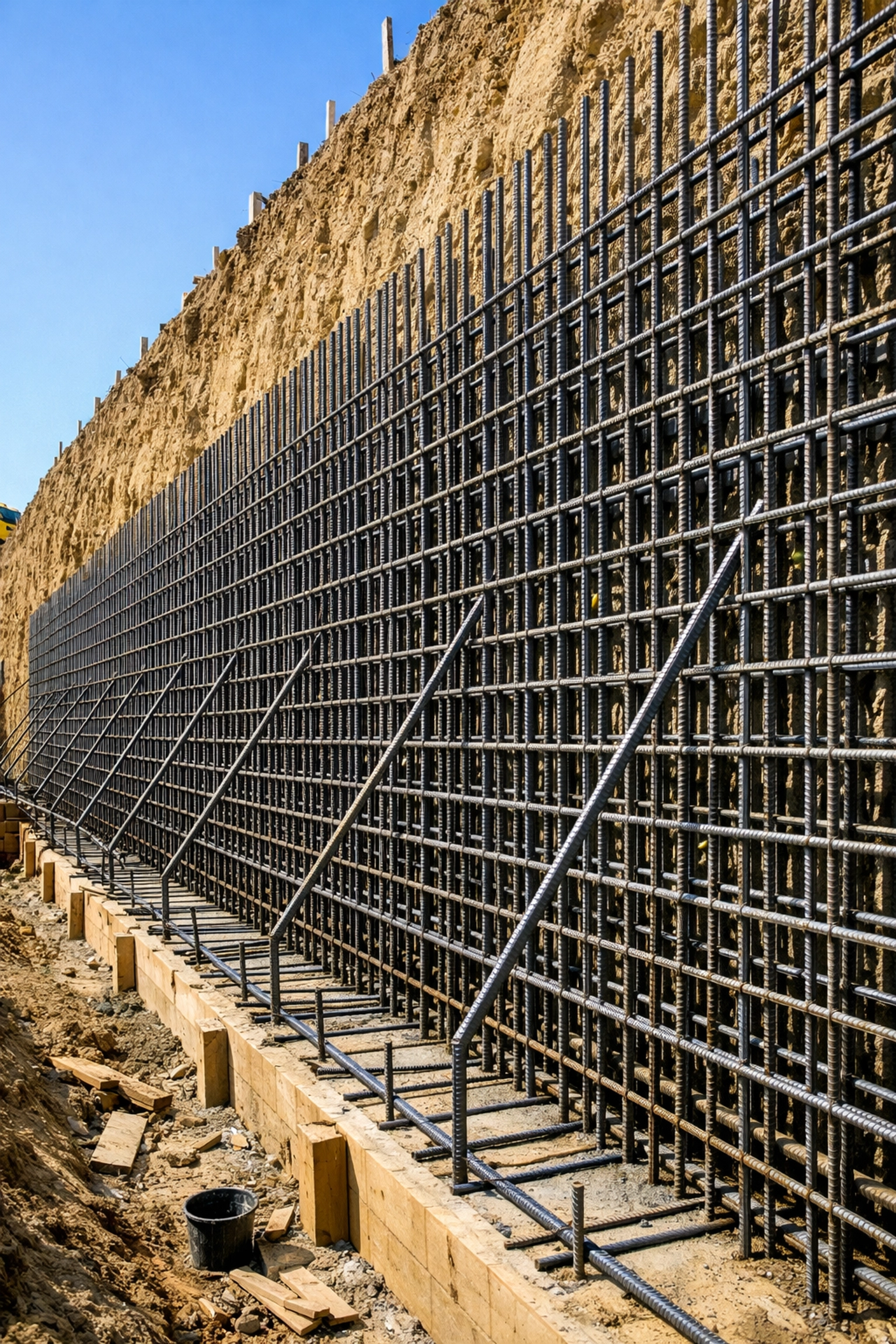
Concrete is incredibly strong under compression, but it requires help to handle tension. For taller retaining walls, or those holding back heavy clay soils, internal reinforcement is mandatory. This typically involves the use of rebar (reinforced steel) or "geogrid": a high-strength mesh that stabilizes the soil behind the wall.
When a wall is built with low-grade concrete or without the necessary internal skeleton, it lacks the "backbone" to resist lateral pressure. This often results in horizontal cracks or the dreaded "bulge" in the center of the wall. At H&H Concrete and Construction, we provide the highest quality materials and the utmost attention to engineering detail. We understand that a wall needs to be as strong on the inside as it looks on the outside.
Excessive Soil Pressure and Unexpected Loads
Sometimes, a retaining wall fails not because of how it was built, but because of what is happening around it. This is known as a "surcharge load." A wall designed to hold back a simple slope may not be strong enough to support a new driveway, a heavy shed, or a neighboring construction project built right at the edge of the wall’s influence.
External forces can also include:
Tree Roots: As trees grow, their roots exert incredible pressure, often cracking concrete or lifting footings.
Heavy Machinery: Driving heavy vehicles too close to the edge of a wall can cause immediate structural trauma.
Soil Type: Expansive clays expand significantly when wet, putting much more pressure on a wall than sandy or loamy soils.
Our team evaluates the specific site conditions of every project to ensure the design accounts for all potential loads. You can trust our experienced professionals to recommend the right thickness and reinforcement levels for your specific terrain.
Concrete Repair: When Can You Save the Wall?
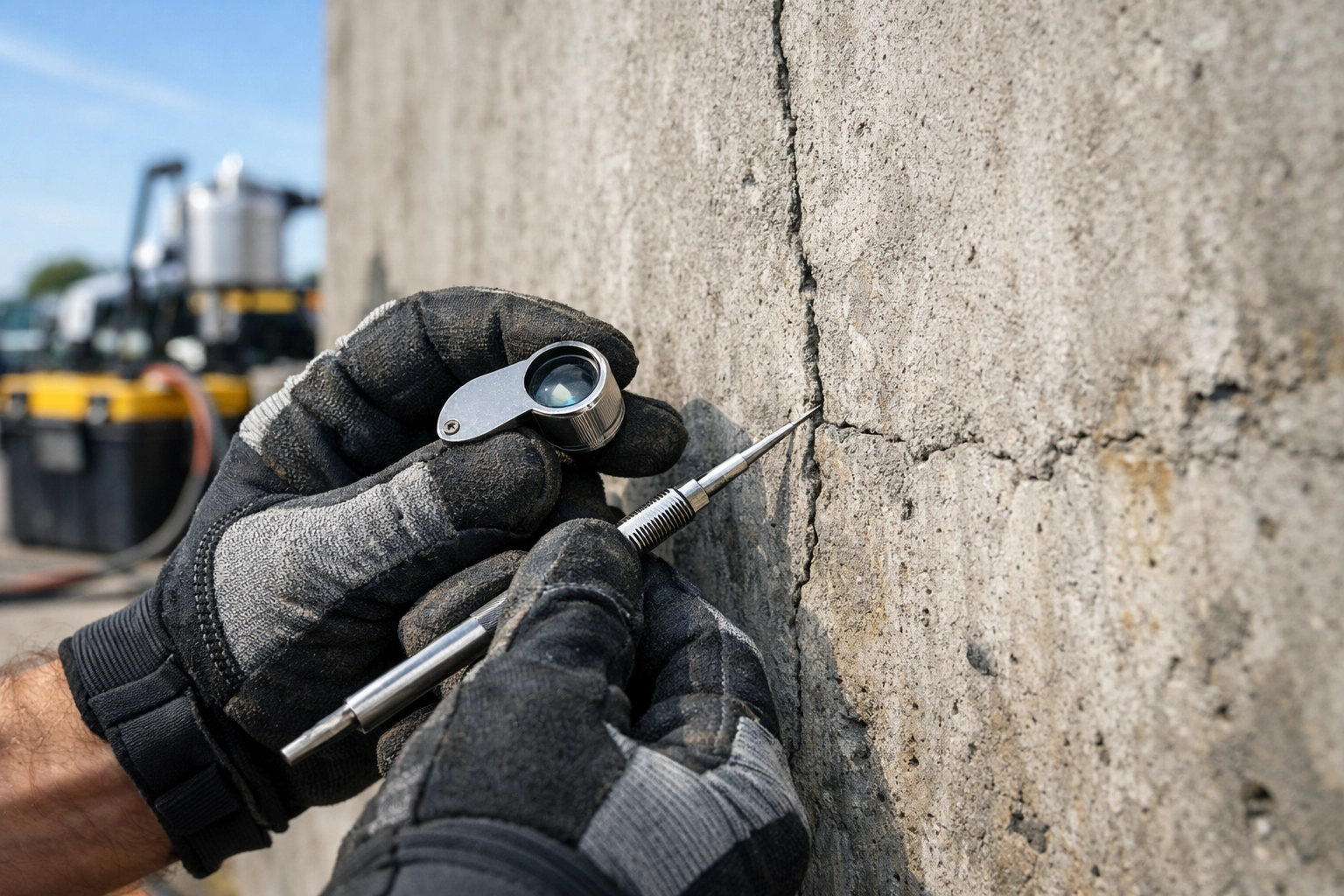
Finding a crack in your wall is stressful, but it doesn't always mean a total teardown is necessary. Early intervention can save you thousands of dollars in replacement costs. Concrete repair is an art form that requires a deep understanding of structural chemistry and engineering.
If the wall is still vertically plumb (not leaning) but has surface cracks, we can often utilize epoxy injections or specialized mortars to seal the gaps and prevent water from entering the core. However, if the wall has begun to "tip" or the base has shifted, more aggressive remediation is required. This might involve:
Installing Soil Nails or Tiebacks: Anchoring the wall into the stable soil behind it.
Adding Counterforts: External "buttresses" that provide additional support to the face of the wall.
Improving Drainage Post-Construction: Retrofitting the wall with better drainage systems to relieve pressure.
If you are noticing these issues, it is vital to act quickly. A leaning wall is a falling wall; it is only a matter of time. You can view some of our successful remediation and installation projects on our projects page.
Why Hire a Professional Concrete Contractor?
It can be tempting to treat a retaining wall as a weekend DIY project, but the risks are high. A failed wall can lead to property damage, injury, and even legal liability if it affects a neighbor’s land. Since 2001, H&H Concrete and Construction has built a reputation for reliable and cost-effective services.
When you work with us, you aren't just getting a crew; you are getting a team of experts who understand:
Local Soil Conditions: We know how the earth moves in our area.
Permitting and Codes: We ensure every wall is built to legal and safety standards.
State-of-the-Art Equipment: From laser screeds to precision excavation tools, we have the gear to do the job right.
Longevity: We don't just build for today; we build for the next thirty years.
Our years of experience allow us to guarantee the highest quality results. We take pride in our beautiful, durable finishes that enhance your property's value and provide peace of mind.
Final Thoughts: Protecting Your Investment
Your retaining wall is the silent guardian of your landscape. By paying attention to the warning signs: moisture, shifting, and cracking: you can address problems before they become catastrophes. Whether you need a brand-new installation or expert concrete repair, H&H Concrete and Construction is here to provide the expertise you deserve.
Don't wait until the next heavy rainstorm to find out if your wall will hold. Contact our team today for a professional evaluation of your site. We are committed to providing durable, long-lasting solutions that stand the test of time.
For more information on our services or to see how we can help with your next project, visit our website or browse our blog for more expert tips on concrete maintenance and construction.
[Back to Blog] | Contact Us Today
Comments